Dining Room
12 Scandinavian Dining Room Ideas That Make Every Meal Feel Like an Occasion
Jump to section
There’s a particular kind of dinner you’ve probably had at some point — where the conversation ran long after the food was gone and no one wanted to be the first to get up and break the spell.
The room had something to do with that. It almost always does.
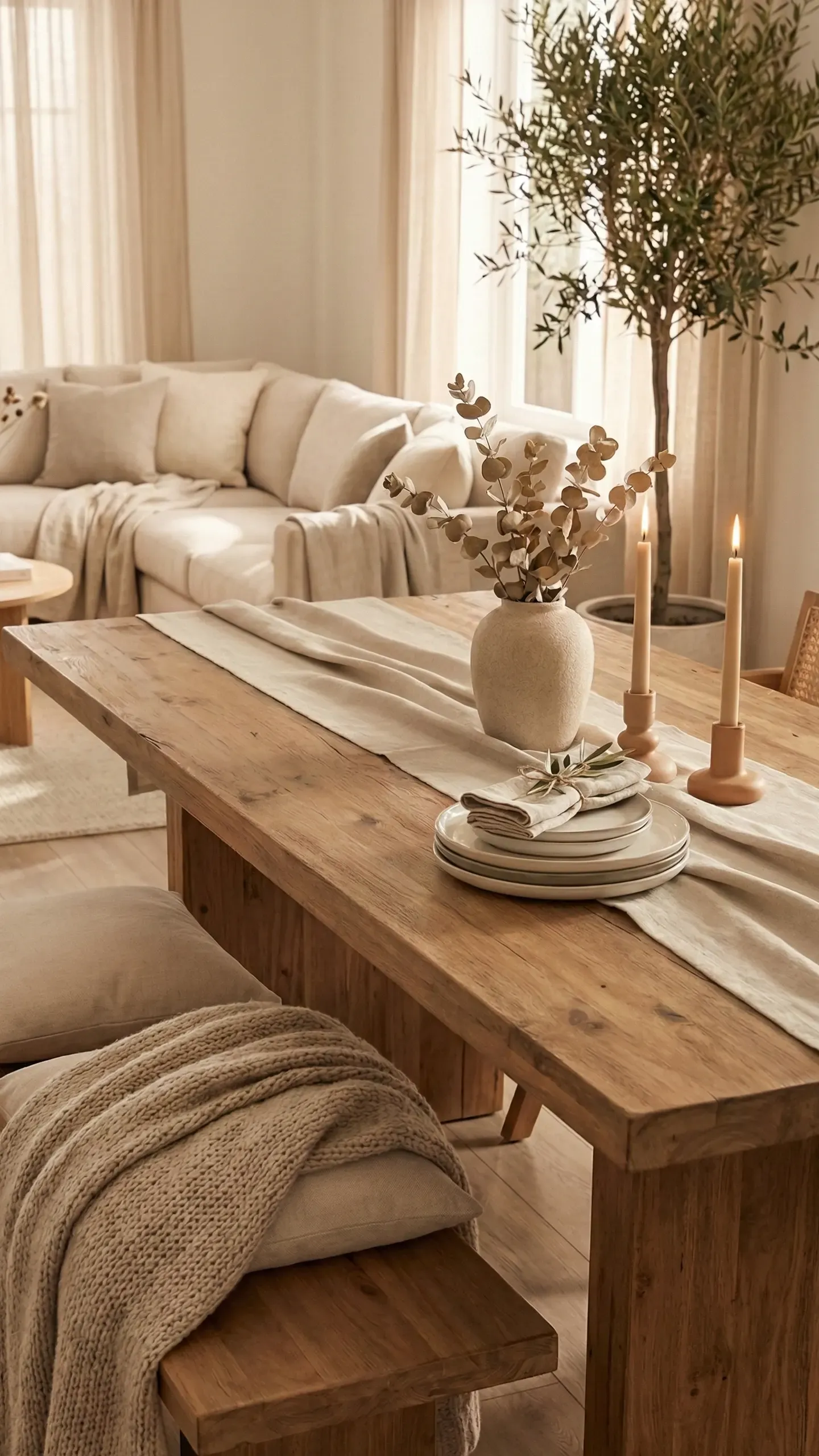
Scandinavian dining rooms are built for exactly that kind of evening. Not grand or formal — warm. Candlelight and wood and the right kind of light overhead. The table as a place people actually want to be, not just eat at.
Here’s what creates that feeling, and how to build it regardless of budget.
The pendant is the room
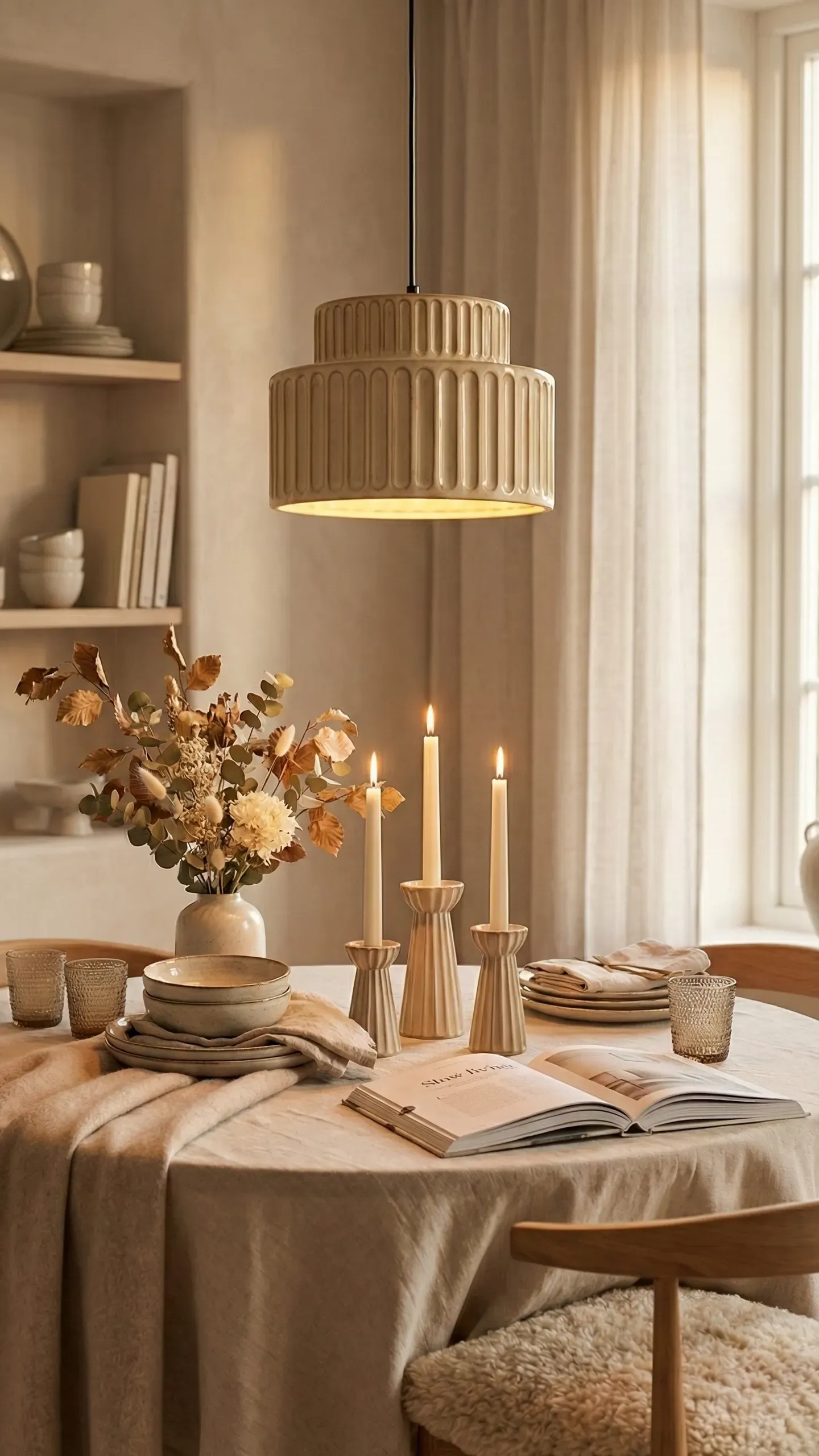
Every dining room has one element that determines the atmosphere of every meal eaten there. In a Scandinavian dining room, it’s almost always the pendant lamp.
Not because a pendant is a dramatic design statement — but because the light it produces, when hung correctly, does something no other light source in the room can do. It creates an island of warm, intimate light over the table while the rest of the room falls into soft shadow. It makes the table feel like the centre of something.
The hanging height is everything. Most pendants are hung too high, which makes them ceiling decoration rather than table lighting. The right height: approximately 60–75cm above the tabletop. Close enough that the light spills onto faces, not just plates.
The shade matters too. Paper, linen, rattan and woven materials diffuse light softly. Metal and glass can work, but they require more care — bare bulbs and harsh reflective shades produce the wrong quality of light for a dining room that’s meant to feel good to be in.
And the pendant should be on a dimmer. Bright overhead light is for lunches and homework. Dinners deserve something lower.
The move: Measure the hanging height of your current pendant or fixture. If it’s more than 80cm above the table, lower it. If there’s no dimmer: a smart bulb with a dimmer function is a cheap fix.
The table that does everything right
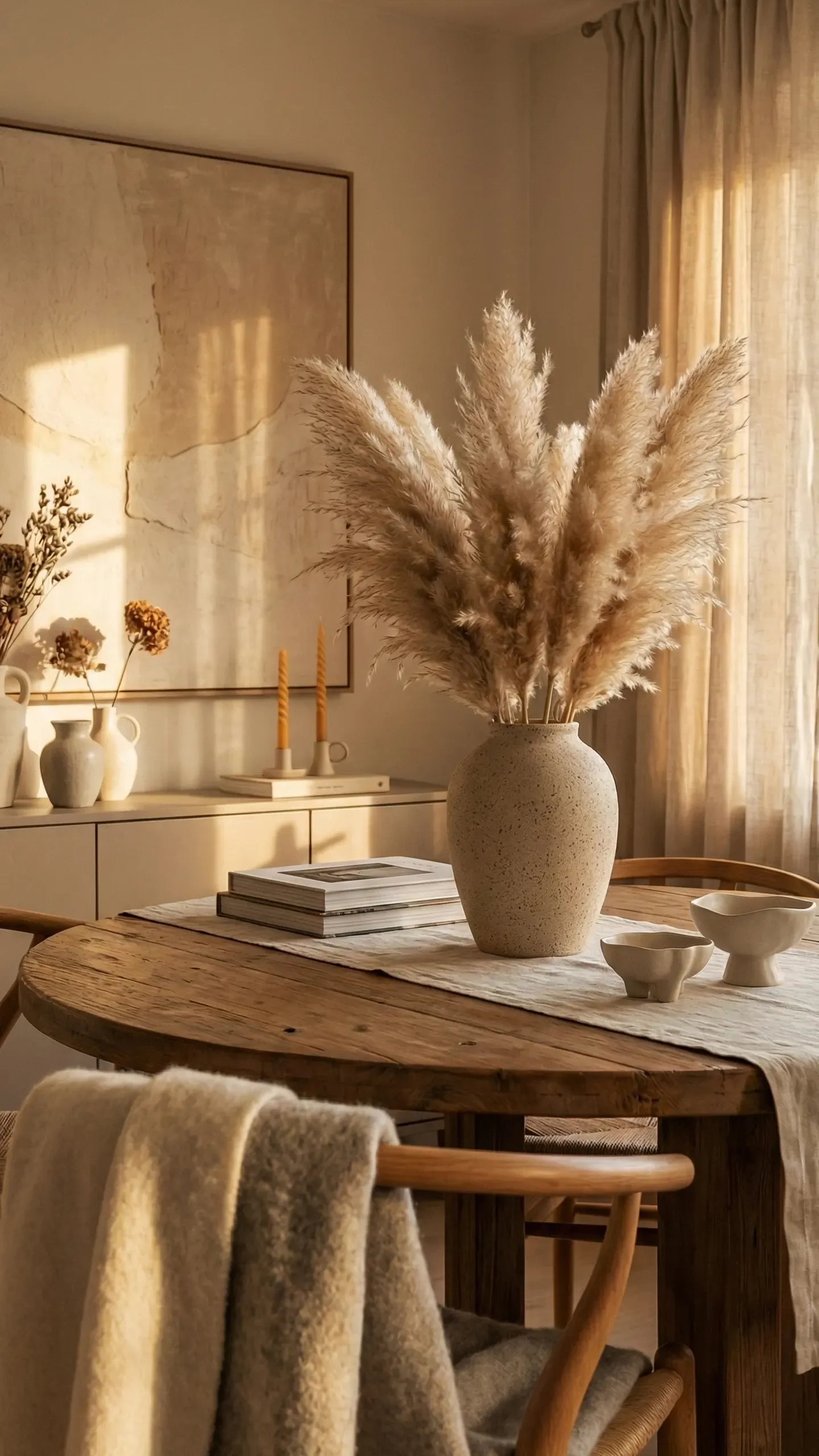
The table is the obvious starting point, but it’s worth thinking about specifically why certain tables work in this style and others don’t.
The round table is the most Scandinavian choice, and not just aesthetically. Round tables have no head — no implicit hierarchy. They invite conversation across the whole surface rather than down the sides. They make a room feel more generous than their actual size suggests, because the eye reads a round shape as softer and more welcoming than a rectangle.
In light oak or ash, a round table also adds warm material to the room without visual weight. The grain and natural variation of the wood does something that painted or laminate surfaces can’t: it makes the table worth looking at when no one’s sitting at it.
If you have a rectangular table: that’s fine. What matters more is material and finish. A wooden table in warm tones will always outperform a glass or high-gloss table in terms of how the room feels, regardless of shape.
The move: If your table is glass, consider a wooden top or replacement — glass tables reflect light in ways that feel cold. If your table is painted or laminate, a natural wood oil treatment may be possible.
Chairs that earn their place
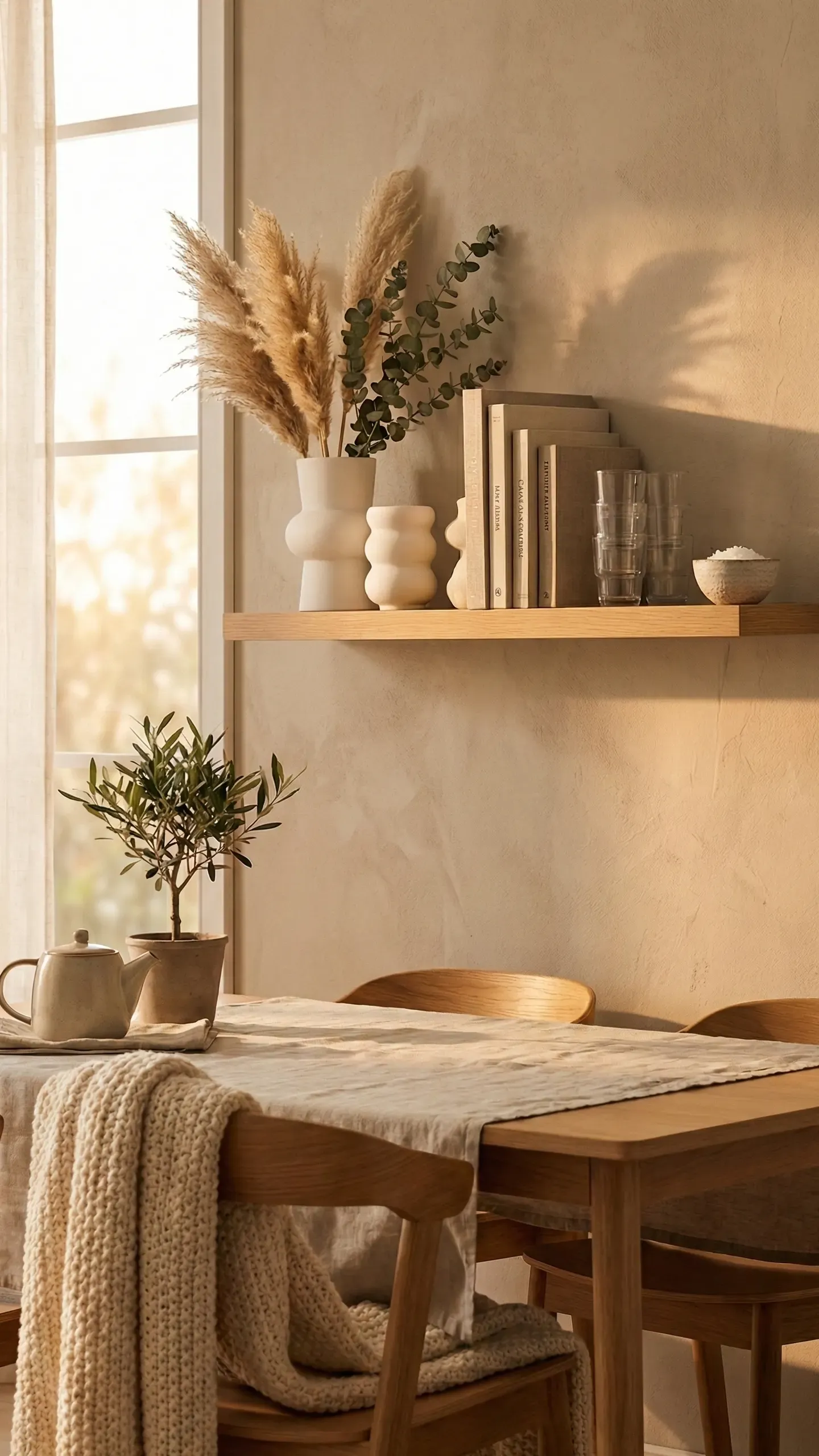
Chairs are where personality enters the Scandinavian dining room without disrupting the calm.
The classic choice is a chair with some visual structure — curved back, woven seat, visible joinery — in the same wood tone as the table. These chairs are worth looking at. They’re furniture as craft, not just seating.
But the more interesting approach is to mix slightly. Two different chair styles in the same wood family, or chairs that match at the table with one or two accent chairs at the ends in a different (but harmonious) material. This reads collected and intentional rather than showroom-complete.
What to avoid: chairs that are too visually heavy or too low-contrast with the table. The chairs should relate to the table, not compete with it.
The move: If your chairs feel wrong for the room, start by reupholstering the seats if they’re padded — a linen or boucle fabric in a warm neutral makes a significant difference at relatively low cost.
Candlelight as a habit, not a special occasion
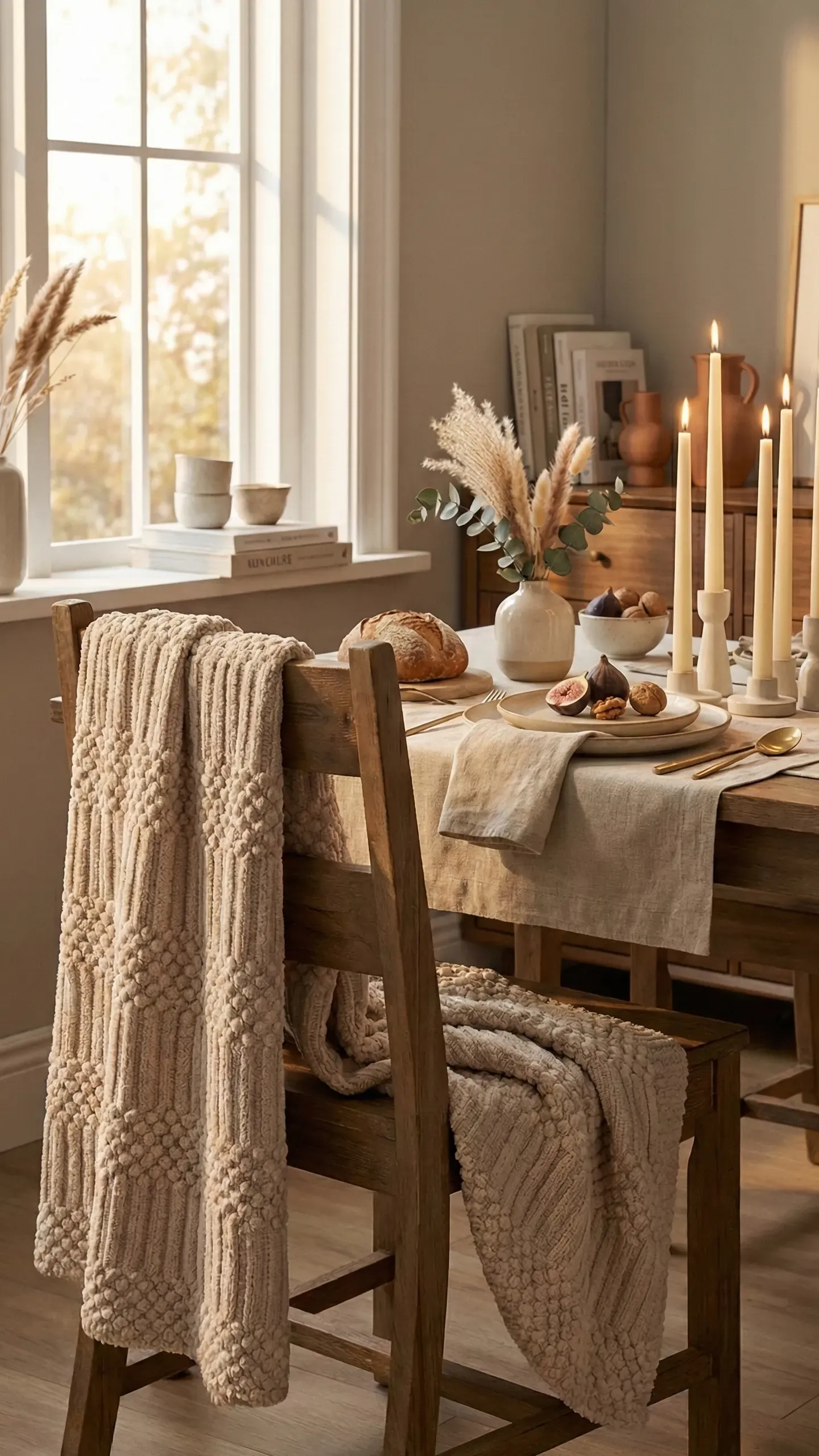
This is the single most transformative thing most people can do for their dining room, and it costs almost nothing.
Light candles for every dinner. Not just guests. Not just birthdays. Every dinner.
The effect of candlelight on a dining room is partly visual and partly physiological — warm flickering light genuinely slows the nervous system down in a way that electric light at the same colour temperature doesn’t quite replicate. Dinners last longer. Conversations go deeper. Food tastes slightly better (this is studied and documented).
Scandinavian homes light candles constantly. It’s a daily habit, not a special touch.
The styling of the candles matters too. Tall candlesticks in brass, wood or ceramic, in odd numbers and varying heights. The grouping reads as a single intentional arrangement. A cluster of three or five reads very differently from two matching candlesticks, which reads like place settings for an occasion.
The move: Buy five candles and three candlesticks in different heights this week. Place them on the dining table. Light them at dinner tonight and every night this week. The habit is the transformation.
The free Scandinavian Styling Checklist — room by room, change by change.
The table when it’s not set for dinner
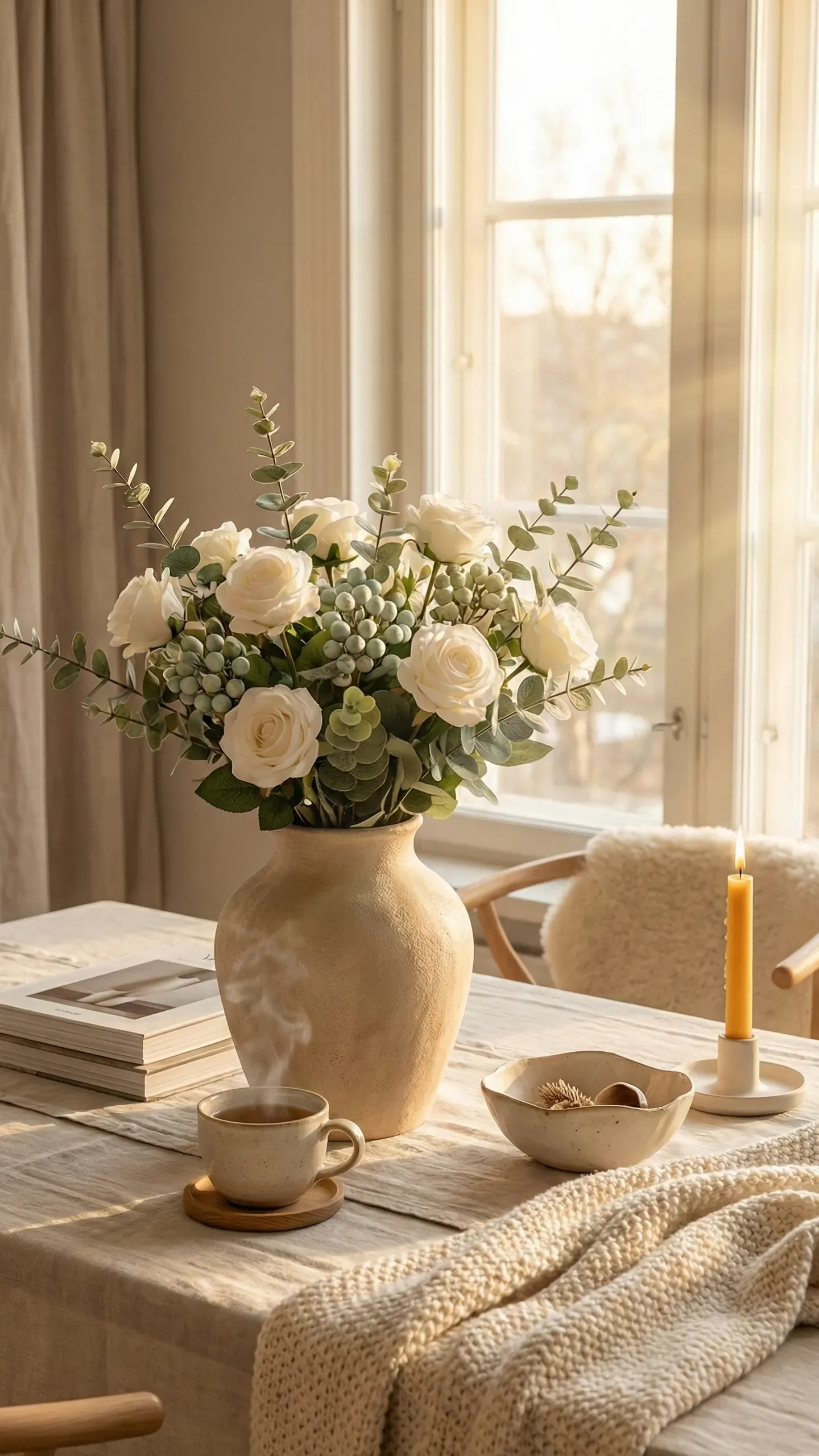
Most dining tables spend more time not being used for dinner than being used for it. How the table looks the rest of the time matters.
The Scandinavian approach to everyday table styling is minimal and seasonal. One centerpiece — usually a vase with dried stems or a single flowering branch — placed where it can be seen from the room’s entrance. A linen runner in warm white or oat, laid across the width rather than the length for everyday use. Possibly one or two candlesticks that live there permanently.
That’s it. The table should never look set when it isn’t, but it should always look considered.
The runner has one specific rule: don’t iron it. Washed linen has a relaxed quality when slightly wrinkled that pressed linen completely loses. The wrinkles are part of the material’s honesty, and they look right in this room in a way that crisp formality doesn’t.
The move: Clear your dining table completely. Put back only a vase and a runner. See how it feels to walk past it for a week.
Giving the room to breathe
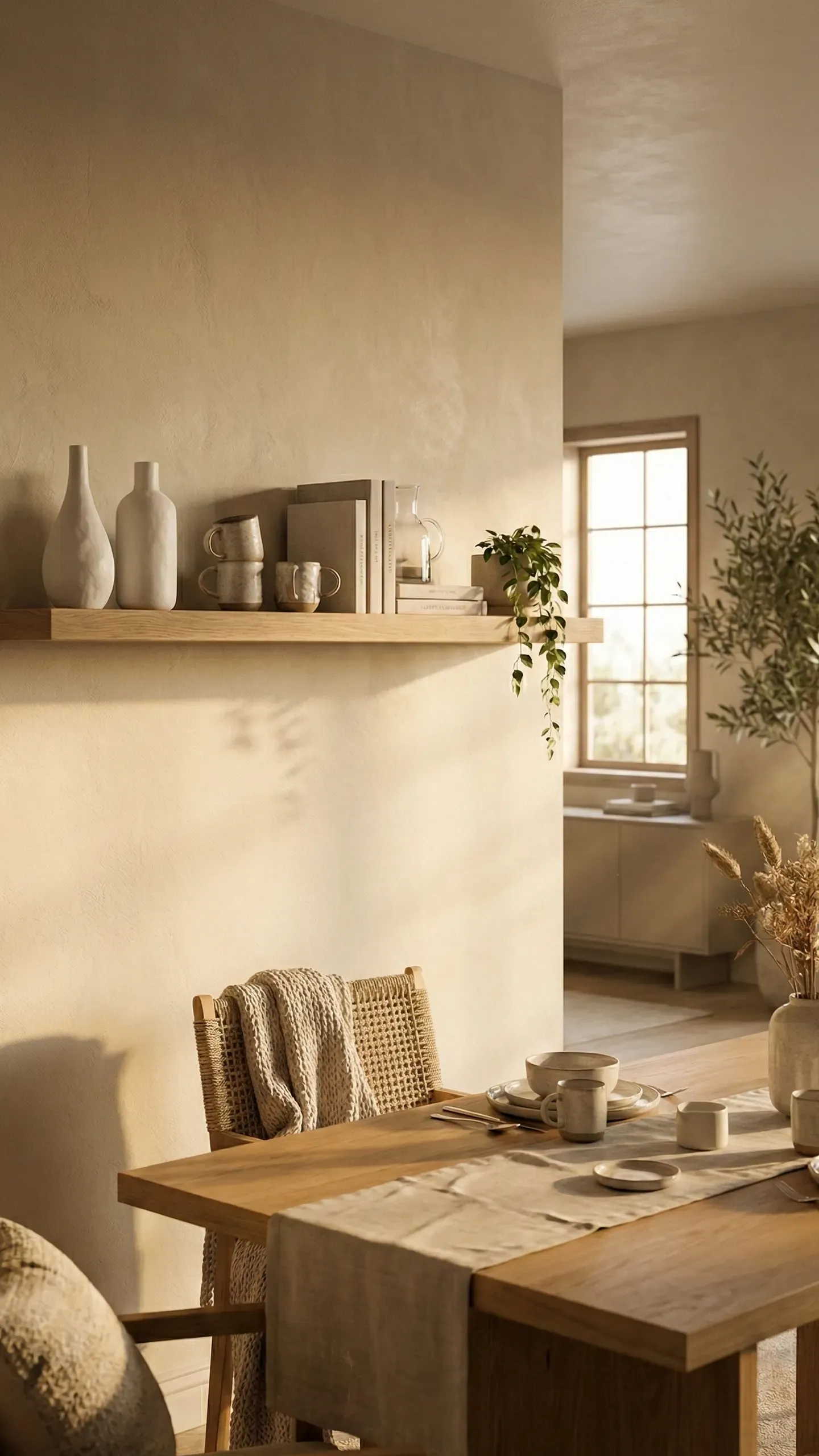
The dining room is the space people most often fill too tightly. A table, chairs on all sides, a sideboard against the wall, a rug with barely enough room for the chairs to pull out properly. Everything present and accounted for, no room to move.
Scandinavian dining rooms tend toward generous space. This doesn’t mean large rooms — it means restraint in what’s in them.
The practical rule: at least 90cm between the edge of the table and any wall or piece of furniture, all the way around. This is the minimum for someone to sit down and stand up comfortably without asking the person next to them to move.
The furniture outside the table and chairs is usually one thing: a sideboard or low shelving unit. Not both. Not three pieces. One, chosen well and given room to be seen.
The move: Measure the clearance around your dining table on all sides. If it’s under 90cm anywhere, consider whether something can be moved or removed.
The rug under the table
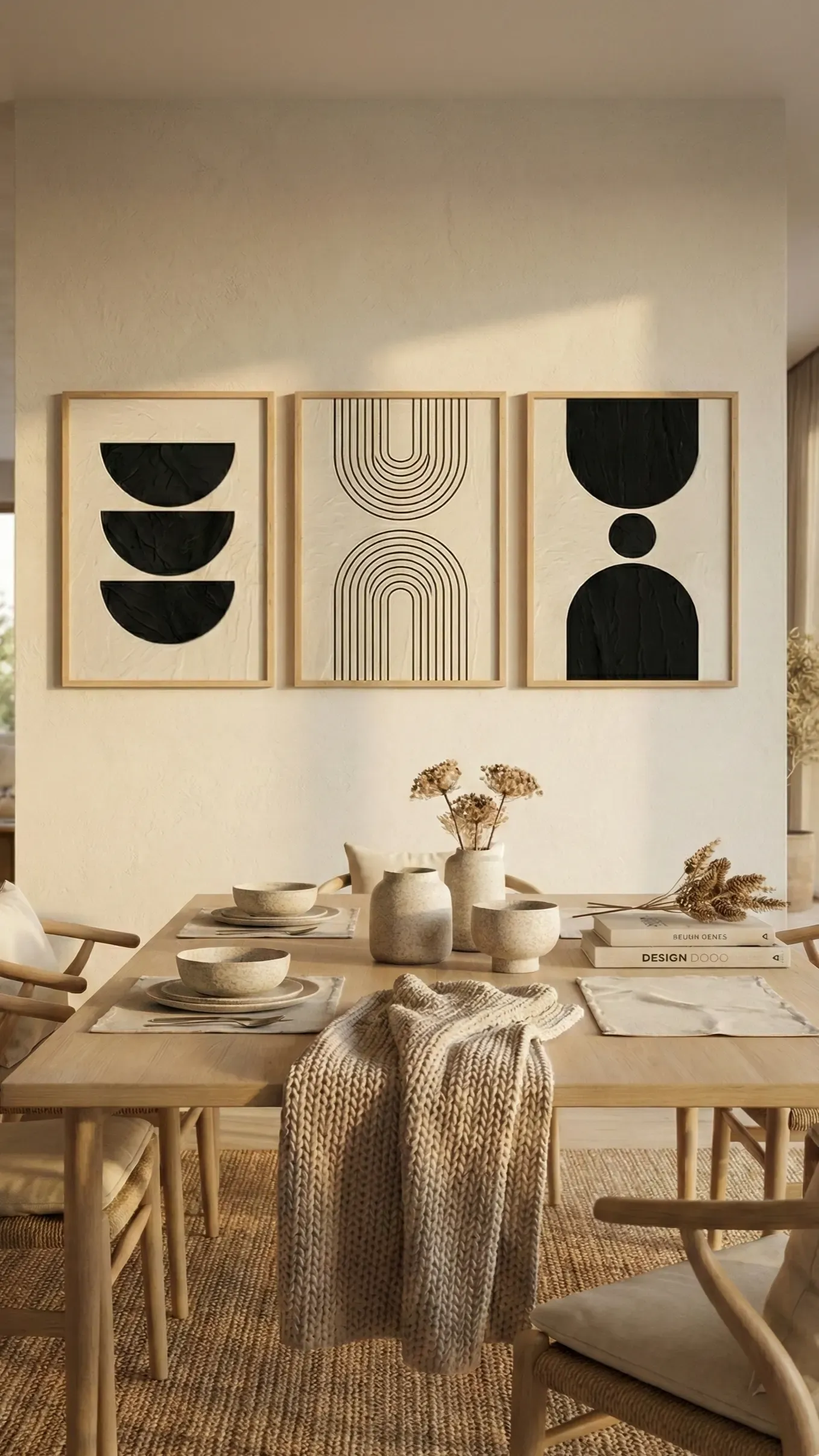
The dining room rug is the one most people get wrong in a specific way: they choose a rug that looks right, size it generously, and then discover that every chair movement sounds like furniture being dragged across a floor.
High pile rugs and dining tables don’t coexist well. The flatweave is the solution — low pile wool in a simple texture or subtle pattern, which handles chair legs moving across it without fuss, wears durably under the traffic, and looks beautiful.
The size rule is the same as the living room rug but more specific: the rug should extend at least 60–70cm beyond the table on all sides. When someone pulls their chair back to stand up, they should still be on the rug. A rug they fall off the edge of every time they move is worse than no rug at all.
The move: Measure your current dining rug or the space you’re planning to put one in. Err toward larger than you think — this is one of the places where more rug is almost always the right decision.
Art in a room about conversation
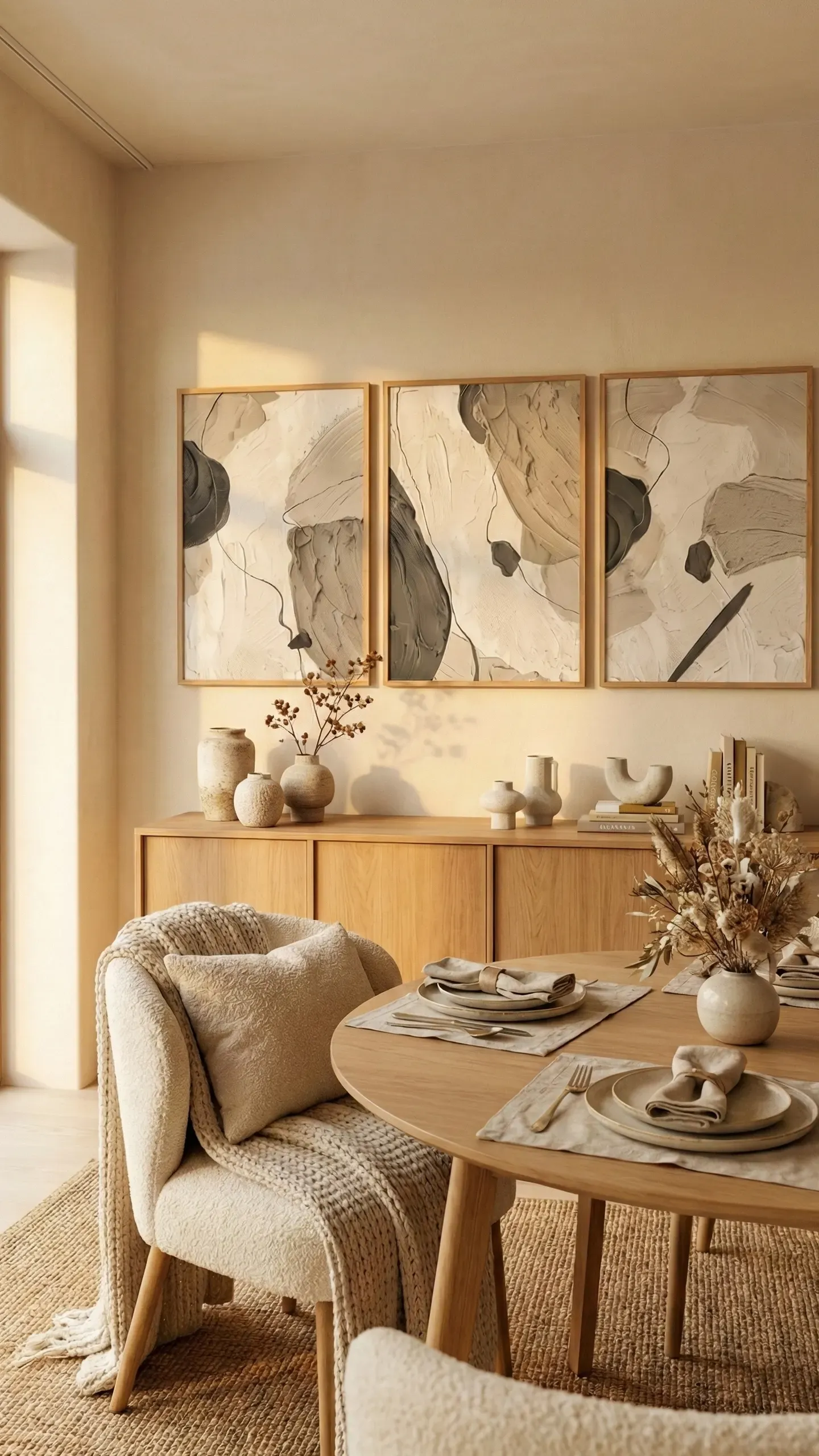
Art in a dining room has a different job than art in a living room or hallway.
You’re going to look at it for extended periods, from a seated position, often while talking to someone. It should be the kind of thing that rewards looking — something that has depth and subtlety, that you can look at for twenty minutes and not exhaust.
Abstract work in the room’s palette does this well. A very large print given generous space on one wall. Sometimes a single piece of ceramics or a sculptural object on a shelf. What doesn’t work: anything that’s visually busy, anything with text, anything in colours that fight the room’s warmth.
Hang it lower than you’d hang it in a hallway. Art in a dining room is viewed sitting down, and the center of the piece should be closer to seated eye level than standing.
The move: Stand in your dining room, then sit down at the table. Notice how different the room looks from seated height. Then look at your current art placement from that position.
The small things that finish the room
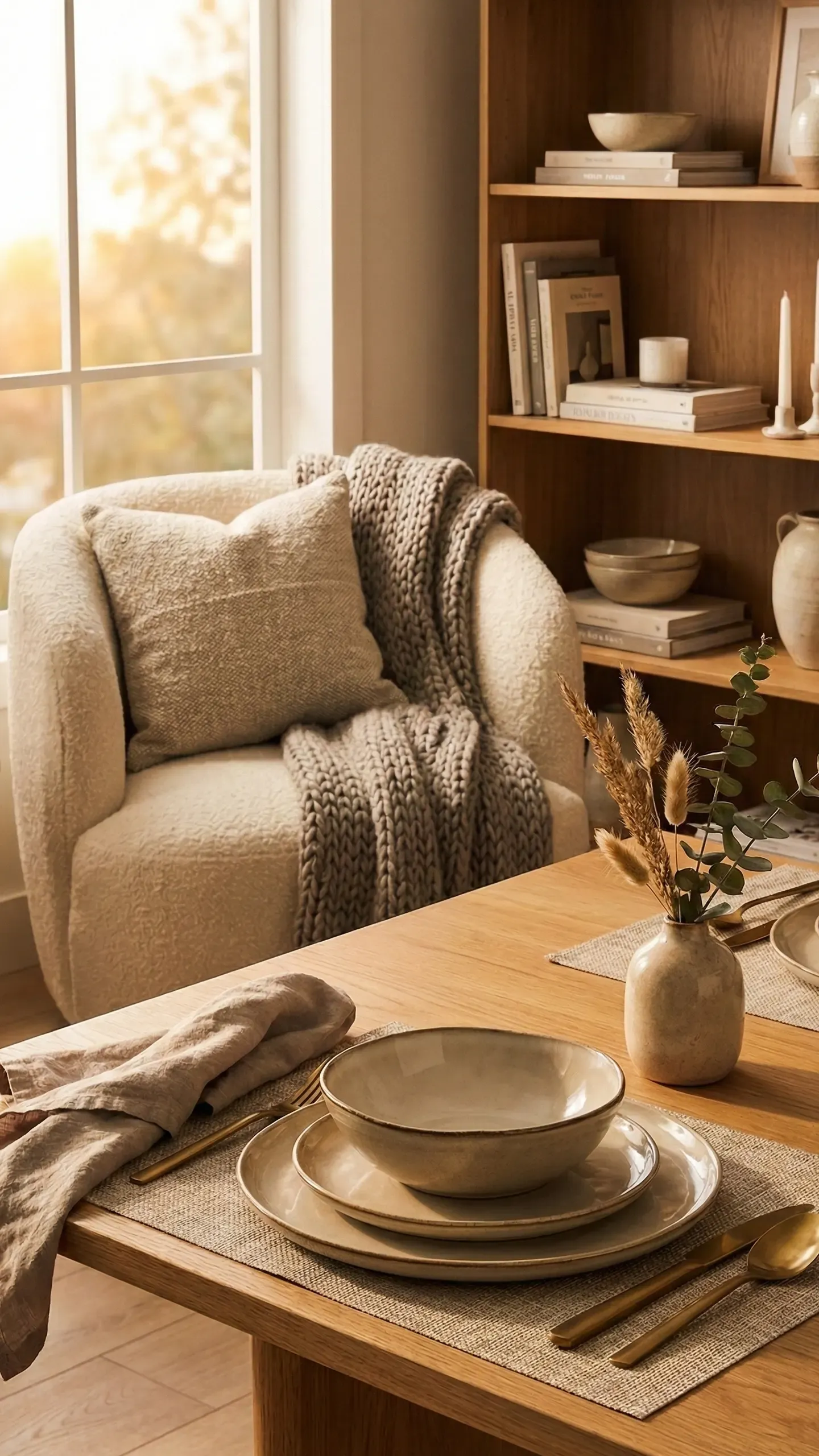
The details in a Scandinavian dining room are quiet but they’re the things you notice without knowing you’ve noticed them.
The ceramic water carafe instead of a plastic bottle. The placemats in washed linen rather than the laminated kind. The wooden serving board that stays on the table because it’s worth looking at. The small ceramic bowl that always holds something — flaky salt, a few dried petals, a stone brought back from somewhere.
None of these are expensive. All of them are chosen rather than defaulted to. And that quality of choice — visible in the objects, in how they relate to each other, in how much space they’re given — is what makes a dining room feel like someone genuinely inhabits it.
The move: Look at the objects that live on or near your dining table. Choose one to replace with something better — not more expensive, just more considered. A linen napkin instead of a paper one. A ceramic bowl instead of a bowl from the wrong room. One thing, chosen properly.
The free Scandinavian Styling Checklist — room by room, change by change.
The dining room is one room in a five-room checklist designed for exactly this: practical changes, no renovation required. Download the free Scandinavian Styling Checklist and work through your whole home the same way.